Most rare neurodevelopmental disorders have no disease-modifying therapies. We take a phenotypic screening approach: rather than starting from a known drug target. Working in close collaboration with the Human Neuron Core, we screen compound libraries against disease-relevant phenotypes in patient-derived iPSC neurons and look for compounds that rescue cellular dysfunction.
In CDKL5 deficiency disorder, loss of the CDKL5 kinase results in an excitatory/inhibitory imbalance. We are screening for compounds that restore inhibitory tone in patient-derived neurons. In PTEN hamartoma tumor syndrome, PTEN loss drives mTOR hyperactivation and neuronal overgrowth. We are running parallel efforts: iPSC neuron assay development for phenotypic screening and drug repurposing.
Natural products have historically been a rich source of drugs and drug leads. Caregivers of children with rare neurodevelopmental disorders are increasingly moving towards treating their children with bioactive natural products and natural product-enriched nutraceuticals. These natural products can serve as drug leads and often act as pleiotropic modulators of complex biological networks with generally favorable safety profiles, making them compelling starting points for medicinal chemistry optimization.
Our most advanced program targets non-opioid pain and epilepsy through CBD analog development. CBD modulates multiple ion channels involved in pain and seizure signaling, but its poor drug-like properties limit clinical utility. We are developing analogs with improved potency, selectivity, and pharmacokinetics while retaining the multi-target polypharmacology that makes CBD effective for pain and epilepsy.
Many neurodevelopmental disorders are caused by haploinsufficiency, where one functional copy of a gene is not enough. We are pursuing three complementary RNA-targeting strategies to upregulate gene expression from the remaining functional allele.
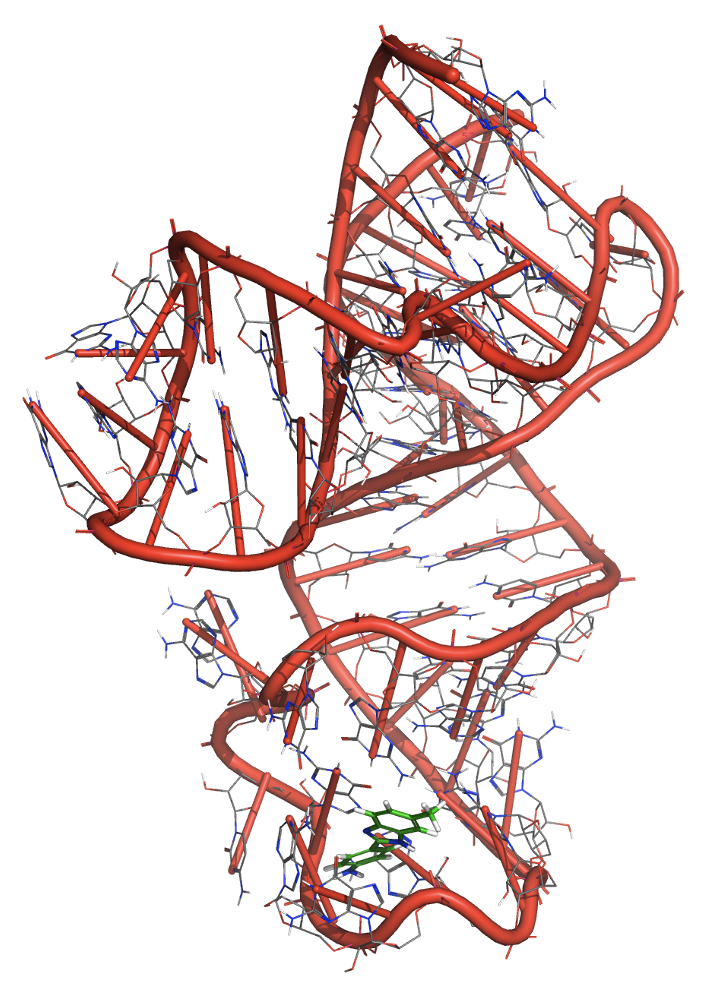
Small molecules that target RNA. Building on the clinical precedent of risdiplam for spinal muscular atrophy, we are developing a platform to discover oral, CNS-penetrant small molecules that modulate RNA splicing for haploinsufficiency disorders. We screen against poison exon inclusion using minigene reporters and phenotypic assays in iPSC-derived neurons.
Small molecule-RNA chimeras. We are designing bifunctional molecules that conjugate a target-specific antisense guide sequence to a small molecule that recruits translational machinery. This approach, inspired by translational activator RNA (taRNA) work, aims to upregulate protein expression by directing translation initiation factors to specific mRNA transcripts.
Antisense oligonucleotides. Using TANGO (Targeted Augmentation of Nuclear Gene Output), we design splice-switching ASOs that block poison exon inclusion to rescue transcripts from nonsense-mediated decay, thereby upregulating functional protein from the wild-type allele. Our computational pipeline has generated ranked ASO candidates for TSC2, SCN1A, SYNGAP1, and EHMT1, validated against clinical-stage ASO design parameters.