TNC Repurposing Library
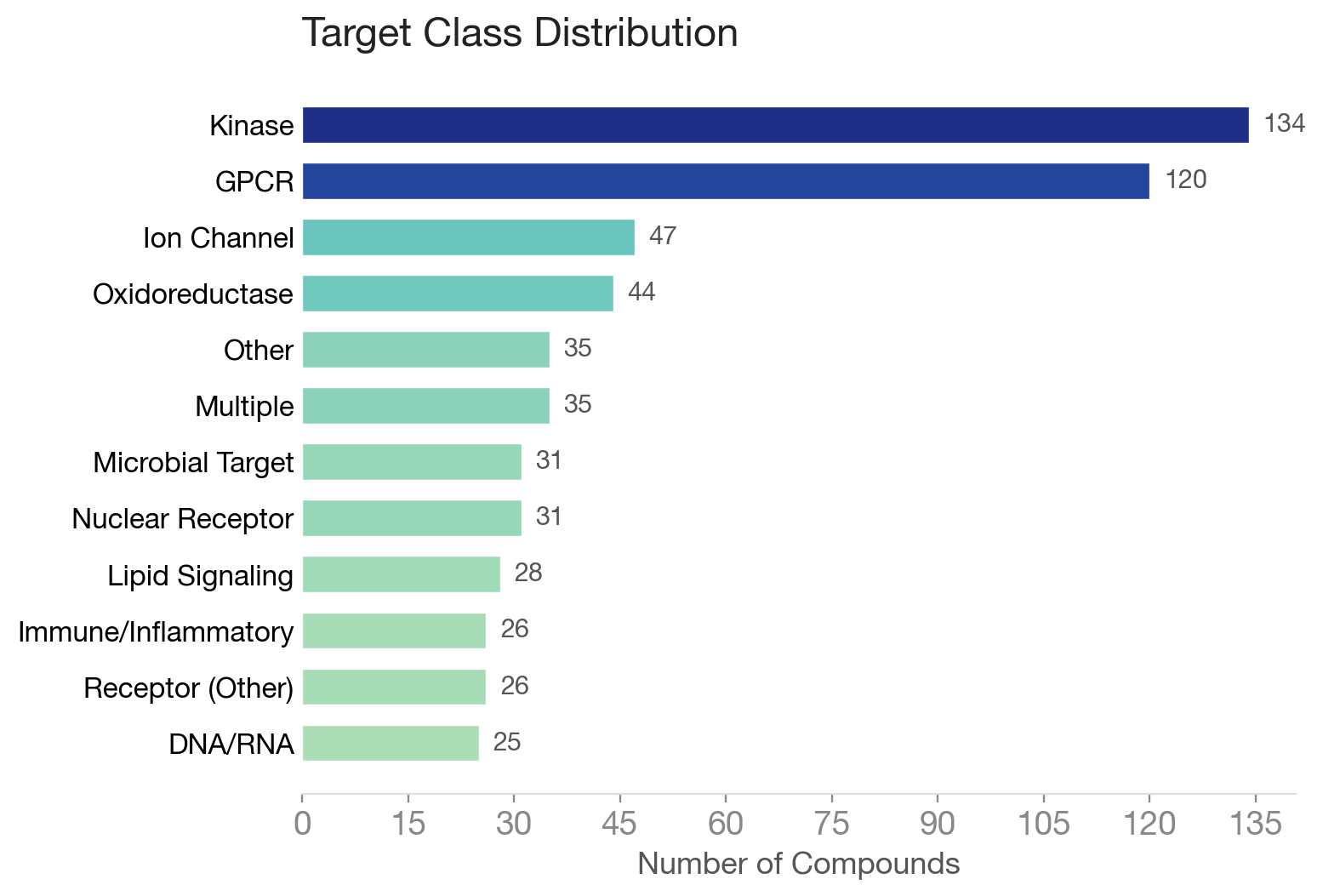
We have assembled a 2,975-compound repurposing library of FDA-approved drugs and pharmacological tool compounds spanning 10 target classes including kinases, GPCRs, ion channels, and epigenetic regulators.
This library is designed for phenotypic screening in iPSC-derived neurons. Because every compound has known clinical pharmacology and safety data, hits can be rapidly advanced into disease-relevant animal models and, in some cases, directly into investigator-initiated clinical trials.
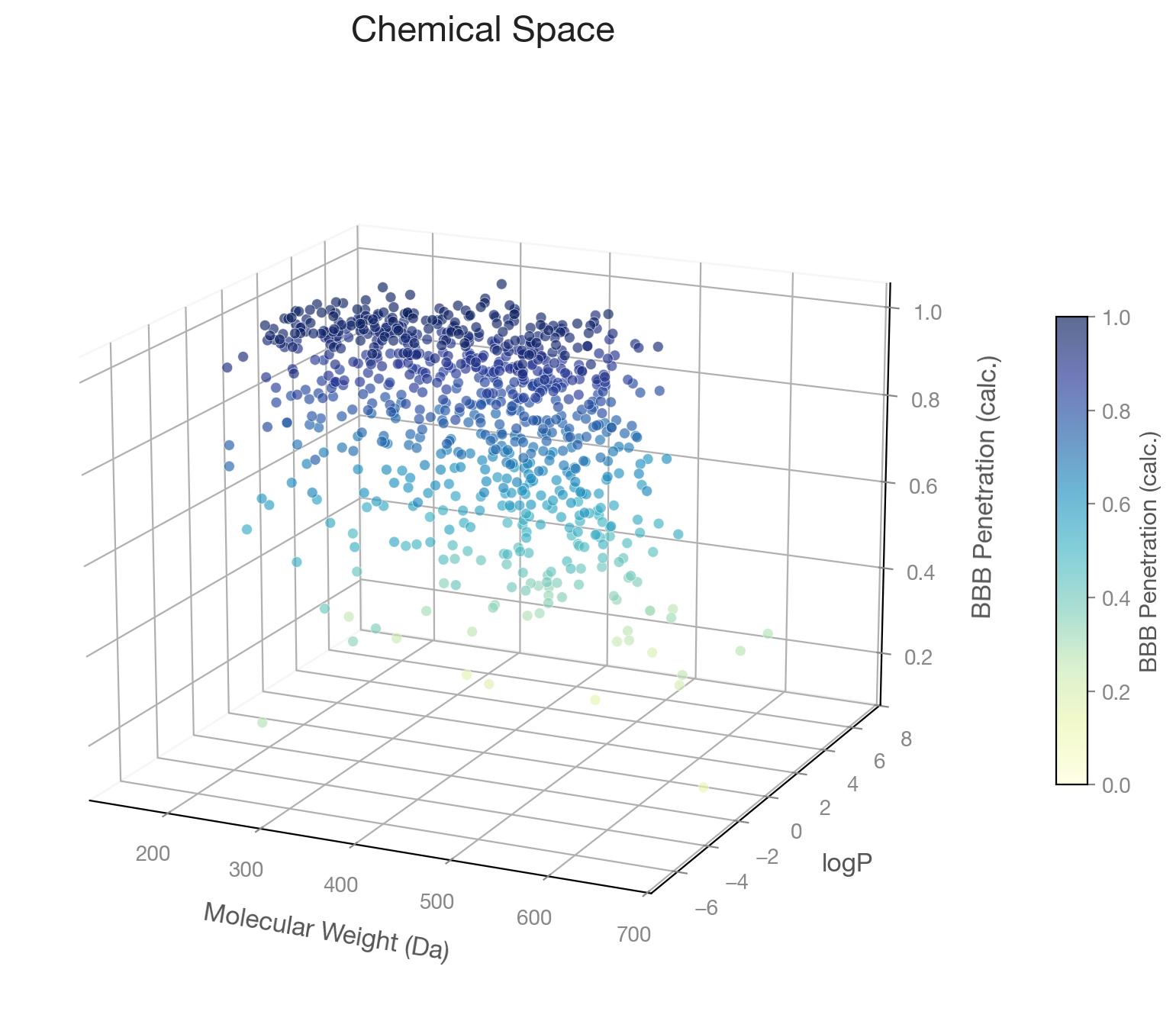
The library occupies drug-like chemical space (MW 150-670, logP -7 to 7) with strong CNS-drug characteristics. Compounds were sourced from MedChemExpress and WuXi and standardized with predicted BBB penetrance, logP, and target annotations.
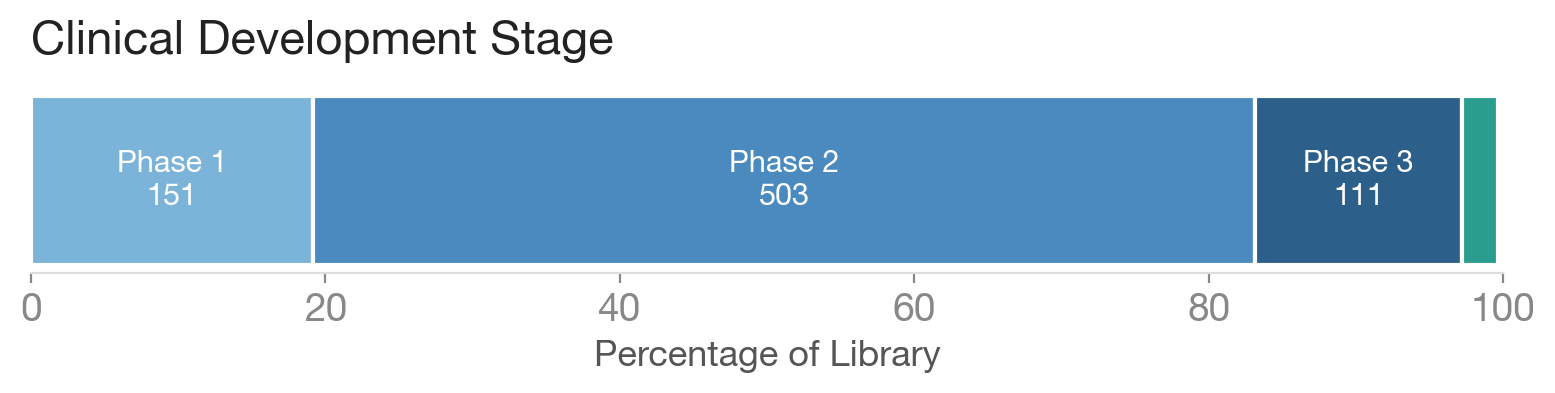
The majority of compounds (64%) are in Phase 2 clinical trials, providing a balance between validated pharmacology and freedom to operate for new indications in rare pediatric neurological disorders.